Coastal Travel
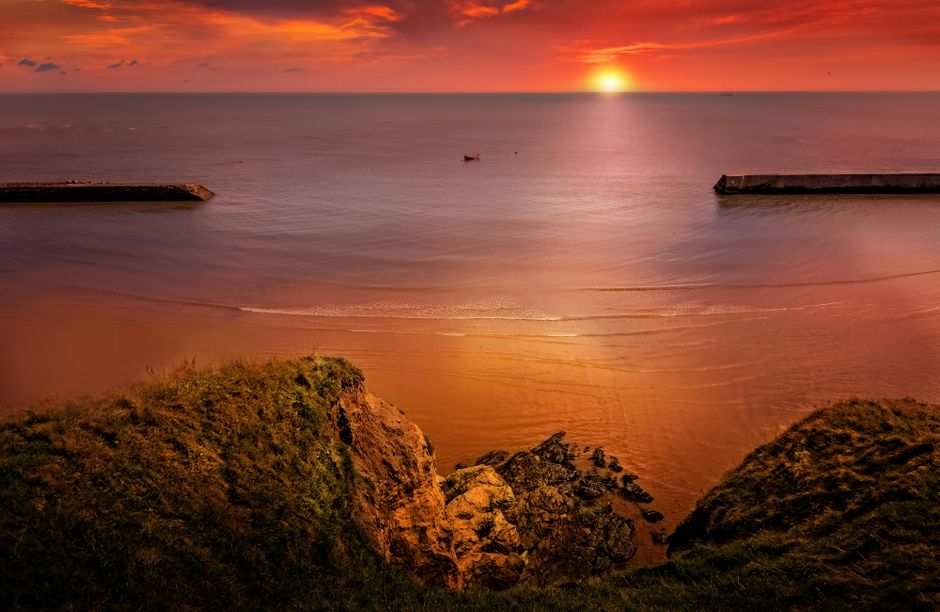
There is a moment on the coast, usually lasting no more than twenty minutes, when the light turns to honey and everything it touches looks like it belongs on a postcard. Photographers call it the golden hour, and if you have ever tried to capture it, you know it is both a gift and a challenge. The window is short, the conditions shift constantly, and the difference between a good shot and a forgettable one often comes down to preparation.
On the coast, golden hour behaves differently than it does inland. You have water acting as a giant reflector, sand and wet rock bouncing warm tones back into the scene, and often a breeze that keeps clouds moving across the sky. All of this can work in your favour, but only if you arrive early and know what you are looking for. Rushing to a location as the sun drops is the fastest way to miss the best light.
The most reliable way to nail golden hour on the coast is to visit your location earlier in the day, ideally at the same tide you expect later. Walk the shoreline, note where the rocks sit, where the waves break, and which direction the sun will be facing. Use a compass or a simple sun-tracking app to confirm where the light will fall. This scouting trip is not about taking photos, it is about building a mental map so that when the light arrives, you can move confidently instead of wandering.
Pay attention to foreground interest. A lonely boulder, a weathered pier post, or a curve of wet sand can anchor a composition and give the eye somewhere to rest. Coastal scenes can otherwise feel flat, especially when the horizon dominates the frame. A strong foreground turns a pleasant snapshot into an image with depth and intention.
Once the golden hour begins, resist the urge to shoot everything. Pick two or three compositions you scouted earlier and work them patiently. Expose for the highlights, since blown-out skies are difficult to recover and rarely look natural. If your camera has a bracketing mode, use it, but do not rely on heavy editing to rescue a poorly timed shot. The warmth of the light is the whole point, and subtle adjustments usually serve it better than dramatic ones.
Do not pack up the moment the sun dips below the horizon. The blue hour that follows often brings soft, moody tones that suit long exposures of waves and rock pools. Many coastal photographers find their favourite frames come from this quieter period, when the crowds have gone and the water takes on a glassy calm.
Finally, be patient with yourself. Golden hour rewards repetition. The more evenings you spend on the shoreline, the more instinctively you will read the light, and the more often you will come home with something worth printing.
